
Deliverables: Product Discovery, UX Research, Product Strategy, UX/UI Design, Accessibility, Mobile App Design, AI-Assisted Development
Team: Product Designer (me)
Timescale: 1 week
Team: Product Designer (me)
Timescale: 1 week
Project Overview
I've decided to design and build a mobile app that helps women strengthen their pelvic floor through simple daily exercises.
The idea came after learning that millions of women experience pelvic floor weakness or prolapse, particularly after childbirth and during menopause. Research also suggests that more than half of women don't regularly perform pelvic floor exercises, and many aren't even sure how to do them correctly.
Problem Discovery
What struck me most wasn't just the statistics.
It was conversations with women I know who quietly shared their experiences with prolapse. Several admitted they felt embarrassed or ashamed to talk about it.
That made me realise this is still a problem many women experience in silence, creating an opportunity to design a product that feels supportive, simple and unintimidating.
Market Research
I researched the current Android market, analysing existing pelvic floor and Kegel exercise apps.
Several products have achieved hundreds of thousands—or even millions—of downloads, demonstrating clear market demand.
However, I also identified opportunities to improve the overall user experience.
Competitive Analysis
The competitor review highlighted several recurring usability issues:
- lengthy onboarding processes
- subscription-first experiences
- cluttered interfaces
- small typography
- inconsistent accessibility
- unnecessary complexity for older users
These findings helped define the design principles for the product.
Product Vision
Rather than creating another fitness app, my goal is to build a calm, accessible product that encourages women to develop a sustainable daily habit.
Core principles include:
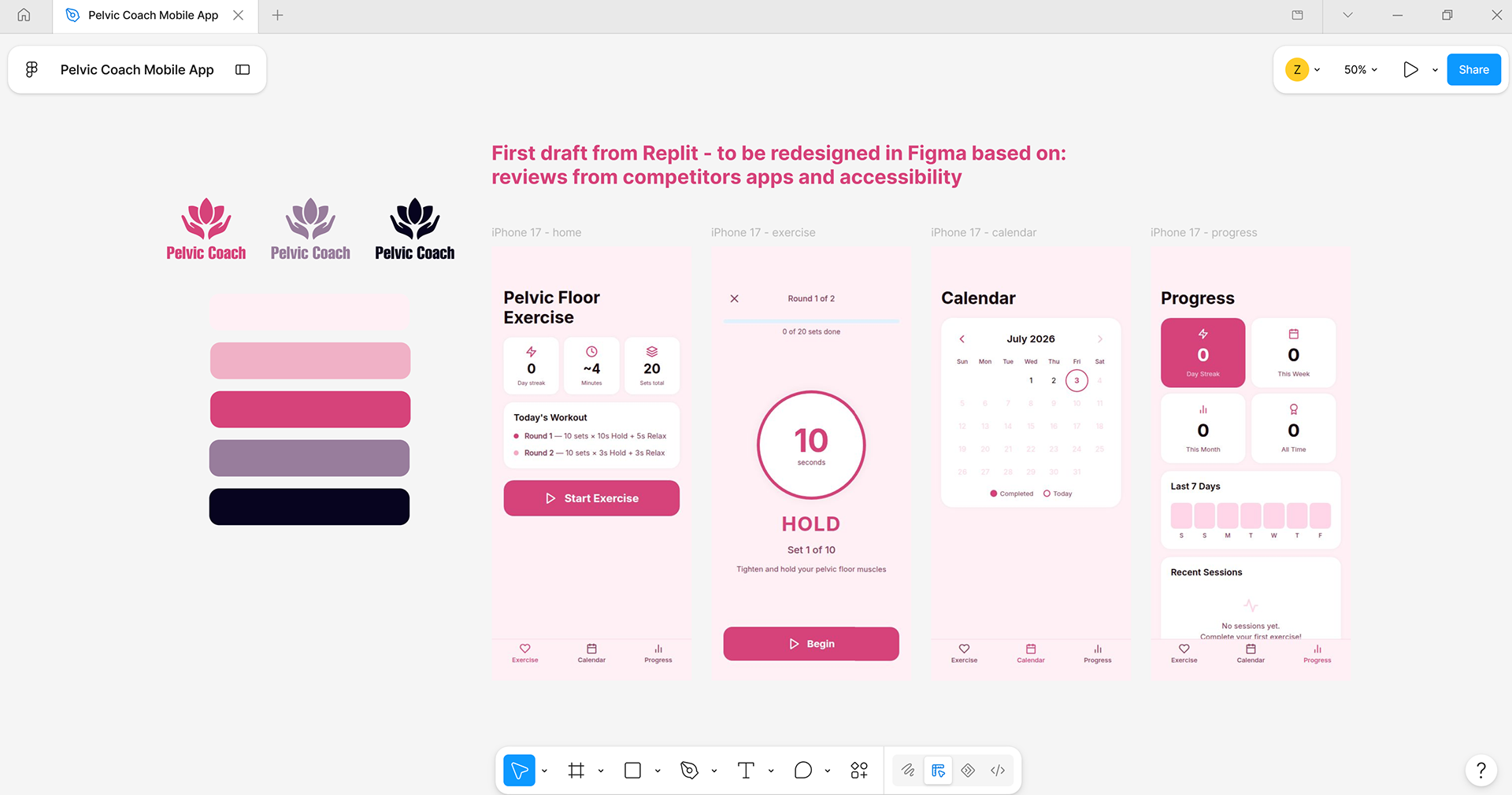
- no onboarding - open the app and start exercising
- one clear Start Exercise action
- large typography
- high colour contrast
- minimalist interface
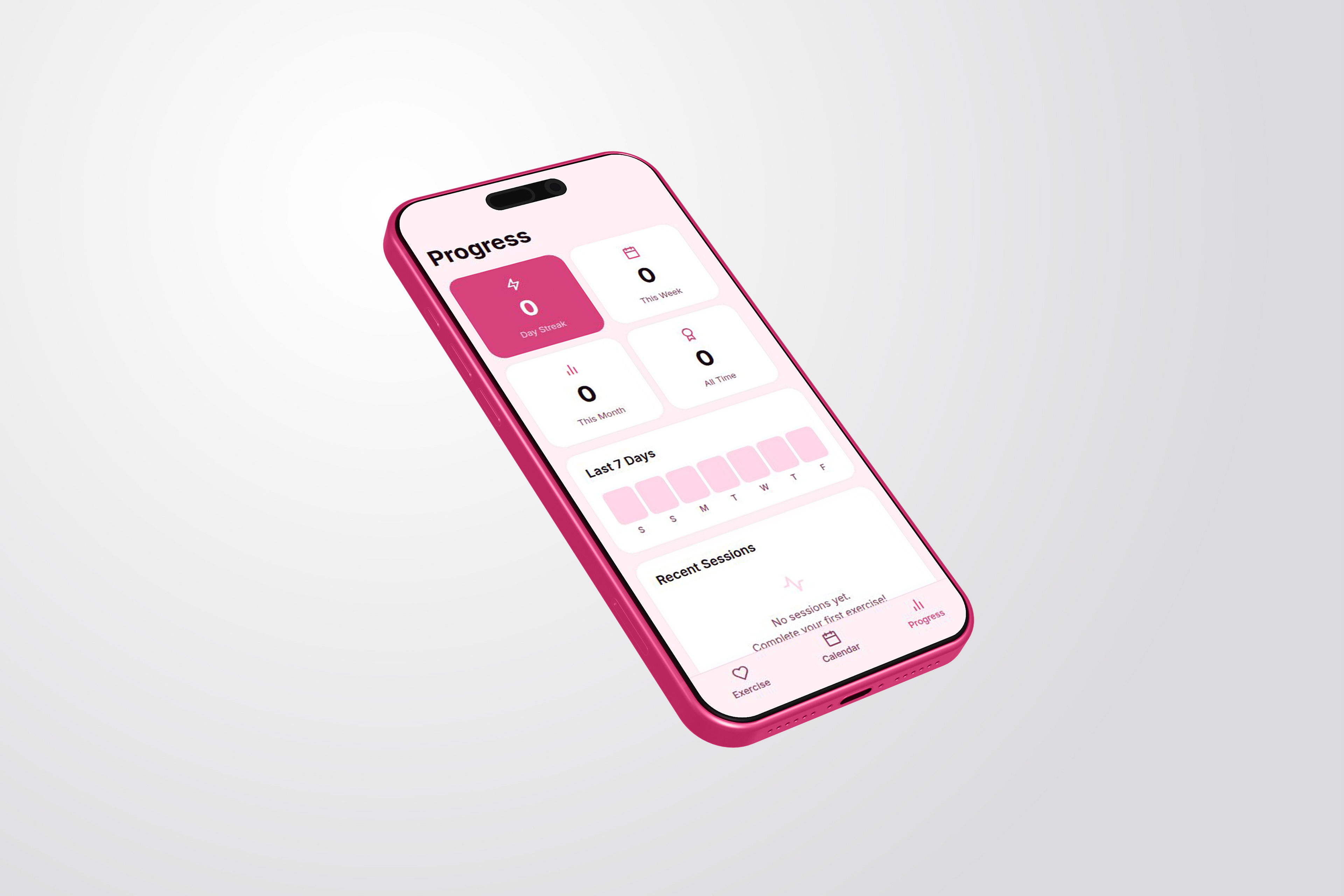
- simple calendar-based progress tracking
- designed specifically for women of all ages, particularly older users.
First Draft From Replit
Design Process
The product will be designed in Figma using:
- user flows
- wireframes
- interactive prototypes
- reusable UI components
- accessibility-first design principles
Product Development
Following design validation, the application will be developed in Replit.
This project also provides an opportunity to explore AI-assisted product development while transforming prototypes into a functional mobile application.
MVP Strategy
The first release will focus on a lightweight MVP for Android.
Launching early will enable real-world validation, allowing product decisions to be driven by user feedback rather than assumptions.
Potential monetisation options will be evaluated after launch based on user adoption and engagement.
Beyond helping women build a healthy habit, this project represents an opportunity to combine product discovery, UX research, accessibility, interaction design and AI-assisted development around a product with genuine social value.
Sometimes the most meaningful products begin by listening to people, understanding their challenges and asking:
"How can I make this just a little easier?"